

SRI LANKA
Relevant Dates: AD 450–700
The island of Sri Lanka was well known in the ancient world as a source of precious and semi-precious gems. Its strategic position, at the heart of the maritime trade routes of the Indian Ocean, has meant that its riches have been traded far and wide for thousands of years. In the fifth to seventh centuries AD, some of these riches made it as far as the kingdom of Kent.

Sri Lanka enjoys the twin advantages of rich natural resources and a choice location, situated astride the trade routes of the Indian Ocean that extend east, west and north. The island was well-known during antiquity as a source of gems; nearly a quarter of its terrain is gem-bearing. Indeed, the ancient name of Sri Lanka in several languages (Ratnadvīpa in Indian, Jerizat-al-Yequt in Arabic, and Pao-Chu in Chinese sources) all mean ‘the land of gems.’ The first historical king of Sri Lanka was Vijaya (ruled circa 543–505 BC), and from his time onwards the island’s rulers sent prestigious royal gift packages that included precious and semi-precious stones to foreign royal courts.
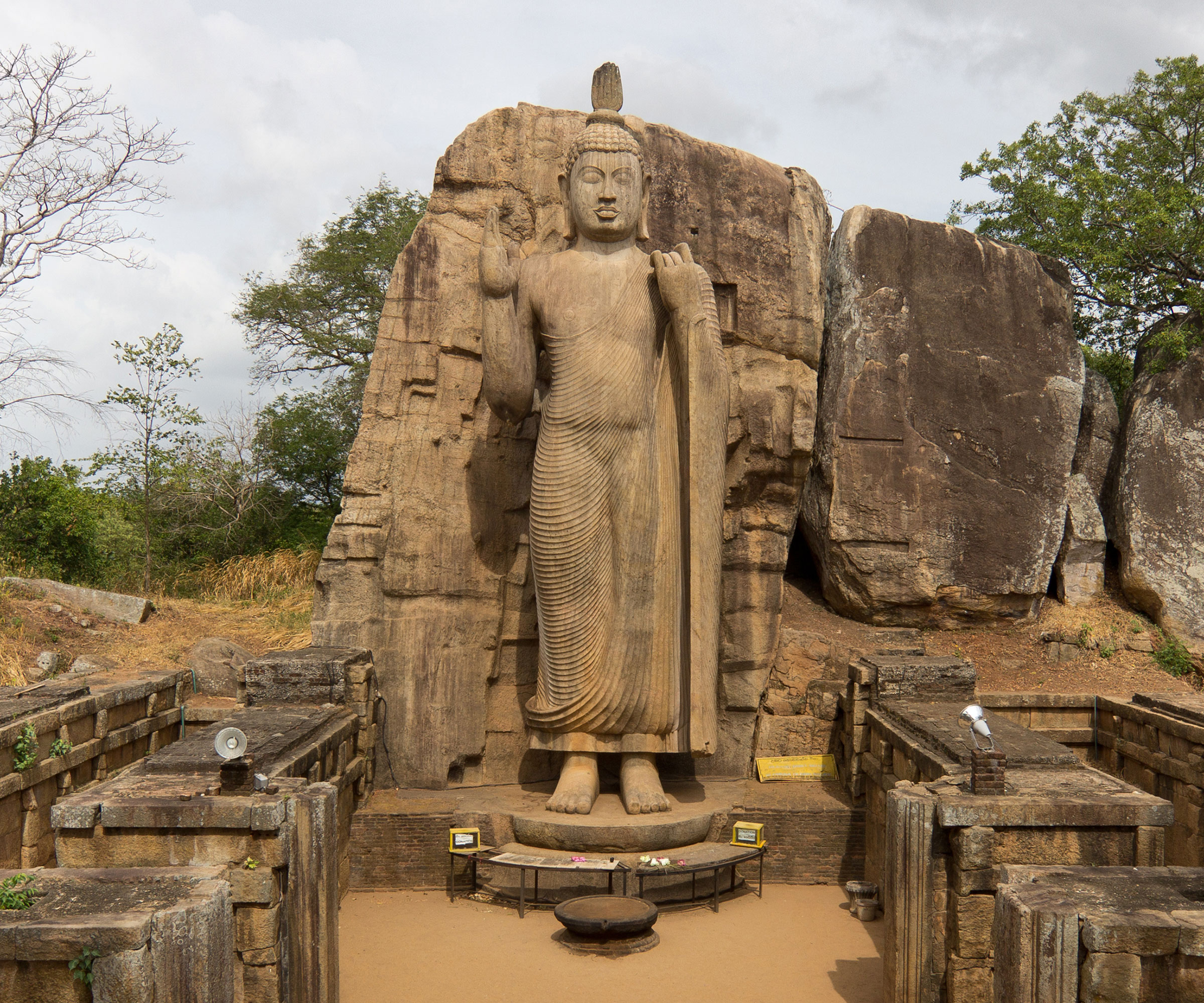
The fifth to seventh centuries AD, when semi-precious gems were reaching Kent from Sri Lanka, coincides with the Middle Anuradhapura period of Sri Lankan history. This period was defined by rule by the royal house of Moriya, which was founded by King Dhatusena (ruled AD 455–473), who led a resistance against the Tamil Pandyan dynasty. Dhatusena claimed the kingship from 455 and won a final victory over his rivals in 459, when he was crowned as King of Sri Lanka, taking Anuradhapura as his capital. Dhatusena’s reign was famous for the construction of eighteen great irrigation tanks, some of which were inter-connected and covered an area of 6,380 acres, as well as an irrigation canal, the Yodha Ela. His reign also saw the erection of the Avukana Buddha statue, a 13-metre-high statue of Gautama Buddha, which still stands to this day. Certainly, late fifth-century Sri Lanka was a wealthy and sophisticated place, at a time when the state that would become the kingdom of Kent was only just beginning to emerge from the ruins of post-Roman Britain.
Garnets
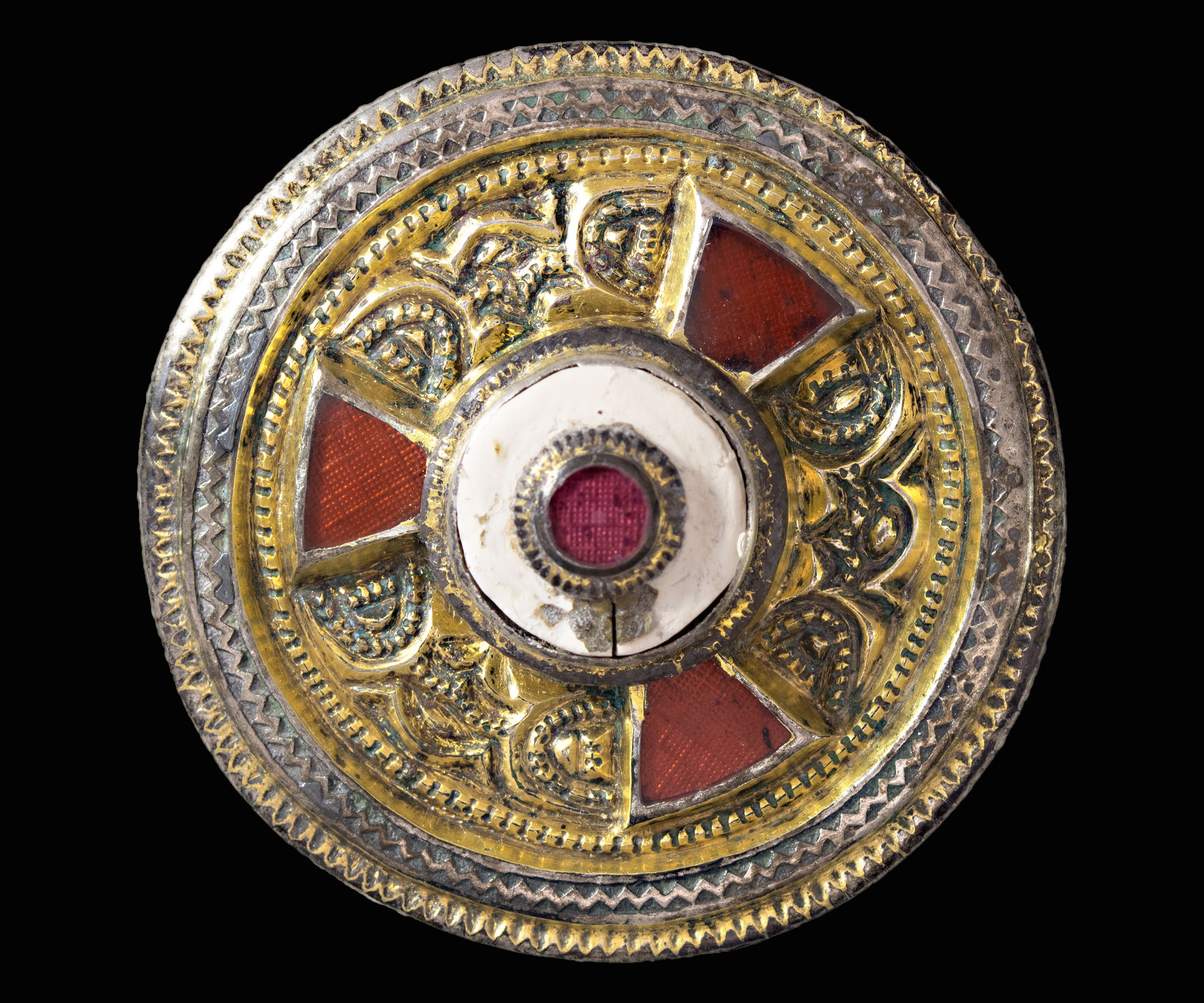
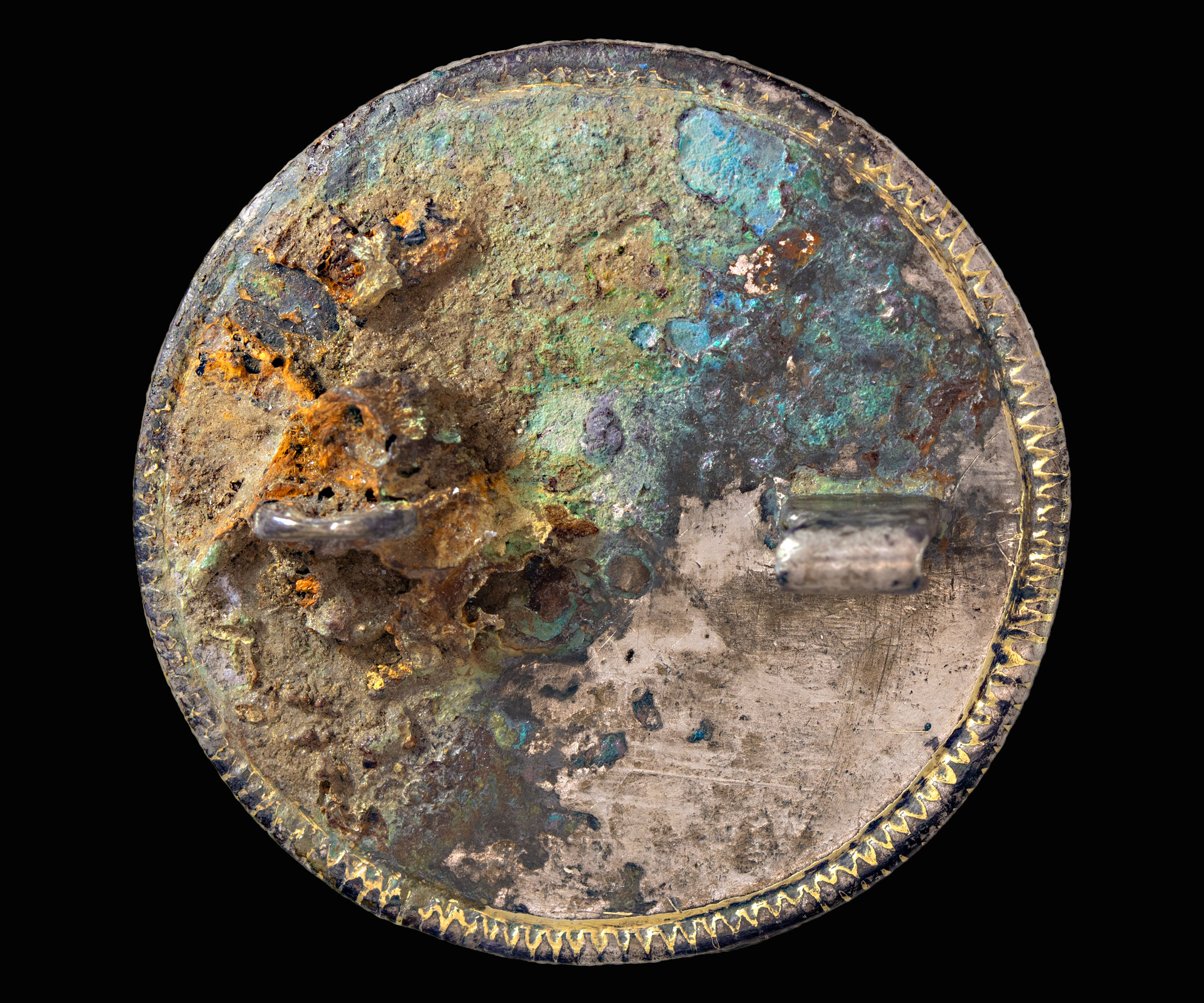
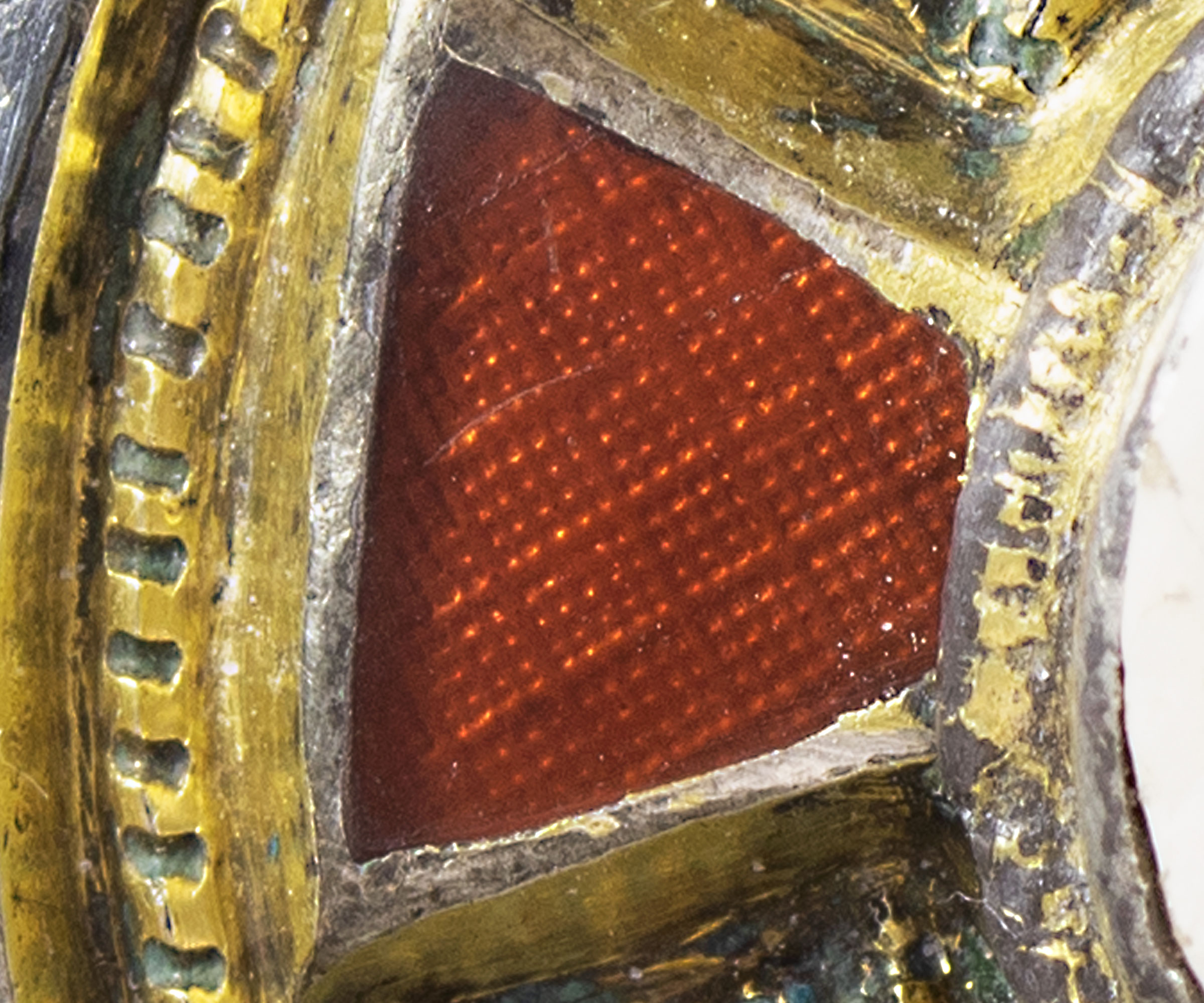
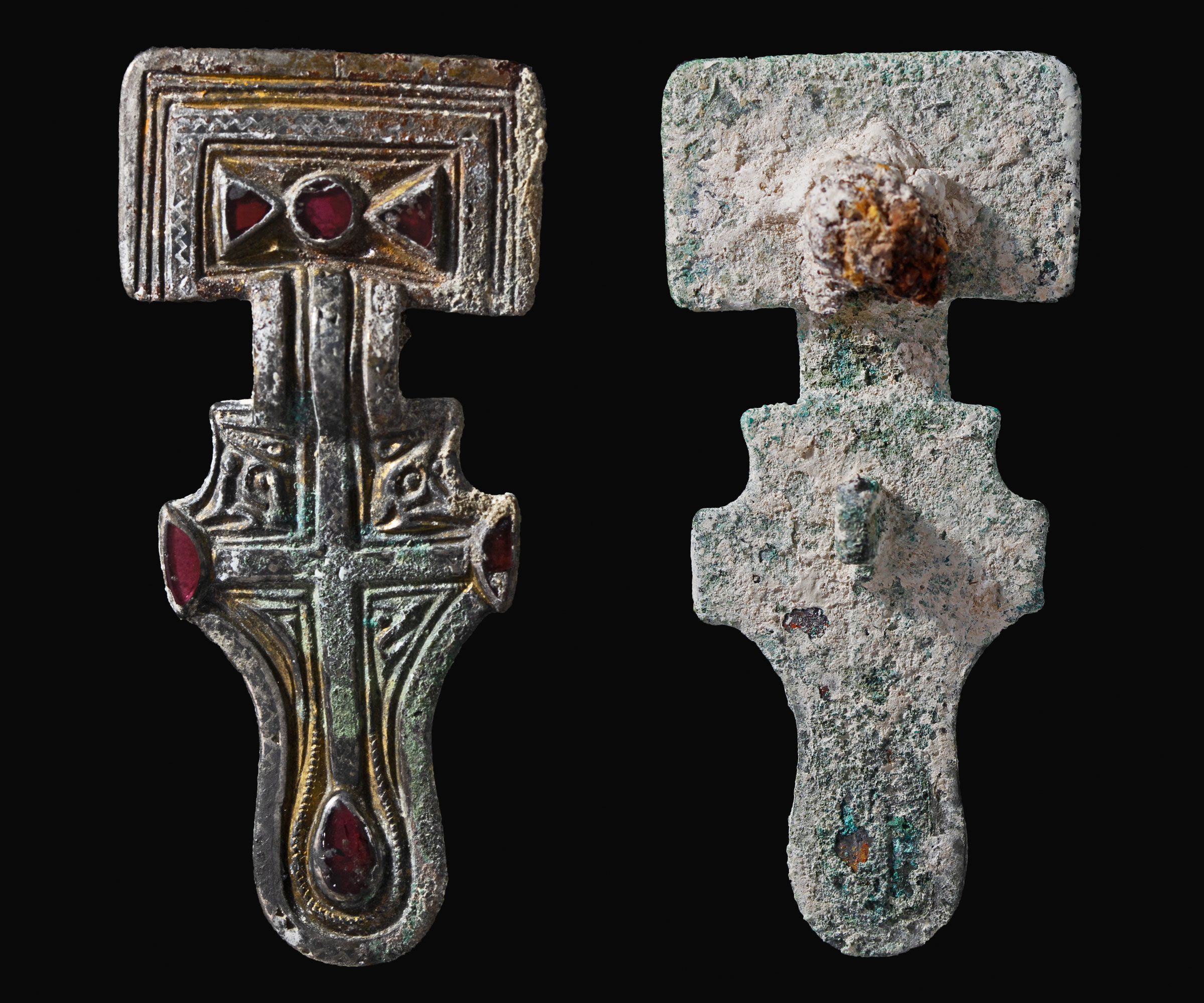
Garnets are a group of silicate minerals that have been used since prehistory as gemstones. From the fifth century AD, garnets began to be used to decorate metalwork used by elite groups across parts of northern Europe, appearing on dress accessories such as belt fittings and brooches, as well as on weapons. The popularity of garnets in this period probably derived from earlier Graeco-Roman traditions, where a deep purple-red colour carried connotations of rank and wealth. Kentish craftworkers seem to have learnt the technique of garnet inlay from their Frankish counterparts around AD 500 and they went on to produce some of the most accomplished garnet-inlaid jewellery seen in Anglo-Saxon England during the sixth and seventh centuries. Indeed, much of the garnet-inlaid metalwork found elsewhere in England may well have been produced in Kentish workshops.
There are European sources of garnets in Bohemia and Scandinavia, but these do not seem to have been widely exploited until the seventh century. The evidence suggests that most, if not all, of the dark red almandine garnets employed by Kentish jewellers came from India or, more probably, Sri Lanka. Garnets are widely found in Sri Lanka, along with more precious stones such as blue sapphires, rubies, and amethysts. Garnets can be found both inland and in garnet-bearing sands on the southern coast.
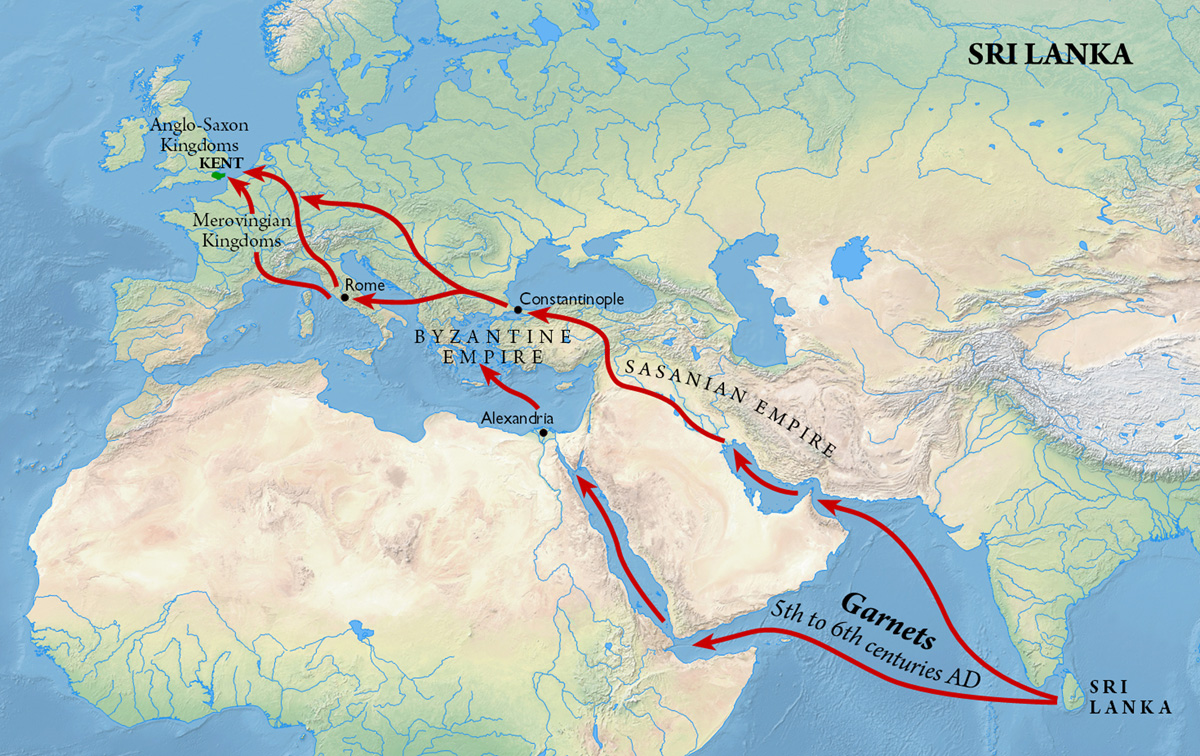
It seems that supplies of garnets from Sri Lanka were reaching the Merovingian Franks by the late fifth century AD, with supplies continuing until disruption in the early seventh century. This disruption was probably caused by the terrible Byzantine-Sasanian War of AD 602-628 which greatly weakened both empires. Thereafter, European jewellers would need to seek sources of garnet much closer to home.

A garnet moving from Sri Lanka to Kent in the fifth, sixth or seventh century is likely to have passed through many hands, from the person who first sifted it from the sands of a Sri Lankan beach to the artisan who inlaid it into a piece of metalwork in Kent. It may have been initially cut to shape by a jeweller in Sri Lanka itself soon after its discovery, or perhaps in the workshops of the Sasanian Empire (centred on Iran) along its journey. It may have been exchanged for coins as part of commercial transactions between traders, bartered, or given as part of a gift from one elite individual or group to another. Ultimately, it would have adorned the costume or weapons of a leading member of Kentish society, its deep red colour symbolising notions of rank, wealth and power that harked back to the Roman Empire.
It is likely that the value of garnets and other exotic materials was enhanced for the northern European elite who wore them by the knowledge that they had such distant origins. Certainly, at least some members of those elites were aware of the existence of India, and presumably Sri Lanka, as well as various places in between.
We cannot be certain of the precise route that a garnet would have taken to reach Kent from Sri Lanka, but the journey must have commenced along the ancient maritime trade routes of the Indian Ocean, sometimes referred to as the Maritime Silk Road. Then by ship along either the Red Sea to Coptic Egypt or via the Persian Gulf to lands controlled by the Sassanid Empire (it has been suggested at least some garnets found in Kent may have passed through Sassanid workshops first). Either way, the garnets most likely then passed into the hands of traders or elite citizens of the Byzantine Empire, and from thence reached the kingdoms of the Merovingian Franks, perhaps by boat journeys along the Danube and the Rhine. The Kentish elite’s relationship with their Merovingian counterparts meant that they were in a favoured position to receive both finished objects bearing garnet-inlays as well as loose garnets (whether raw or worked) with which to adorn locally produced prestige items.
Would anyone have travelled the whole distance from Sri Lanka to Anglo-Saxon Kent? Or indeed, did a sixth-century Kentish traveller ever gaze in wonder upon the statue of the Avukana Buddha? Perhaps not, but it is not completely impossible. The inhabitants of early medieval Europe certainly had heard of India (and probably also of Sri Lanka, the fabled ‘land of gems’). There was believed to be a Christian community, centred around a shrine dedicated to St Thomas, in southern India, and the Frankish sixth-century chronicler Gregory of Tours was able to describe the shrine since he knew a monk who claimed to have travelled there. Later, the Anglo-Saxon Chronicle recorded that in the year AD 833, King Alfred the Great despatched his followers Sigehelm and Æthelstan to carry alms first to Rome, but then on to the shrines of St Thomas and St Bartholomew in India, though it is not known whether they succeeded in this journey (see here for a discussion of this embassy). So, we should not completely rule out the possibility that someone may have travelled all the way from sixth century Kent to Sri Lanka, or vice versa.